
Amanita regalis, commonly known as the Royal Fly Agaric, is a striking mushroom species found in northern forests. Often mistaken for its relatives, Amanita muscaria and Amanita pantherina, this species boasts unique features and ecological significance. In this article, we delve into the fascinating world of Amanita regalis, its distinguishing characteristics, habitats, and differences from its well-known counterparts.
Introduction to Amanita Regalis
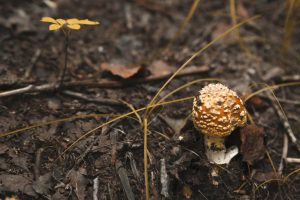
Amanita regalis is a mushroom species celebrated for its regal appearance and ecological importance. Known for its large, brownish cap adorned with yellowish-white warts, it stands out in its natural habitat. Found primarily in boreal forests, this mushroom plays a vital role in maintaining forest ecosystems through its symbiotic relationships with trees.
Taxonomy and Classification
Amanita regalis belongs to the Amanitaceae family within the genus Amanita, a group that includes many visually stunning and ecologically significant mushrooms. Here’s how it fits into the scientific hierarchy:
- Kingdom: Fungi
- Phylum: Basidiomycota
- Class: Agaricomycetes
- Order: Agaricales
- Family: Amanitaceae
- Genus: Amanita
- Species: Amanita regalis
This species is closely related to the iconic Amanita muscaria and Amanita pantherina, sharing some morphological features while retaining distinct traits.
Morphological Characteristics
Accurate Amanita regalis identification relies on recognizing its unique features:
- Cap: Large, hemispherical to flat when mature, with a smooth, brownish surface dotted by pale yellow to white warts.
- Gills: White, free from attachment to the stem, and densely packed.
- Stem (Stipe): Cylindrical with a prominent ring and bulbous base, often covered with a white, powdery coating.
- Spore Print: White, aiding in differentiation from non-Amanita species.
Its striking coloration and large size make it a standout species, even in dense forest environments.
Habitat and Distribution
Amanita regalis thrives in cool, damp, and nutrient-rich environments, predominantly in northern boreal forests. It forms symbiotic relationships with coniferous and deciduous trees, enhancing their nutrient uptake. Key regions where it is found include:
- Scandinavia
- Northern Europe
- Parts of Russia and Canada
Typically appearing in summer and autumn, this species prefers acidic soils and is commonly spotted near spruce and birch trees.
Differences Between Amanita Regalis, Amanita Muscaria, and Amanita Pantherina
Distinguishing Amanita regalis from its relatives, Amanita muscaria and Amanita pantherina, is crucial for proper identification:
Coloration
- Amanita regalis: Brown cap with yellowish warts.
- Amanita muscaria: Bright red cap with white warts, iconic in folklore and fairy tales.
- Amanita pantherina: Light to dark brown cap with pure white warts.
Size and Shape
- Amanita regalis is typically larger and more robust than Amanita pantherina.
- The bulbous base of the stem in Amanita regalis is more pronounced than in Amanita muscaria.
Spore Print
- All three species share a white spore print, but other morphological cues must be considered for proper identification.
Habitat Preferences
- Amanita regalis is largely restricted to boreal forests.
- Amanita muscaria and Amanita pantherina have a wider distribution, including temperate zones.
Ecological Role
Amanita regalis plays a crucial role in forest health. As a mycorrhizal fungus, it forms mutually beneficial relationships with tree roots, exchanging nutrients and aiding tree growth. This relationship enhances soil fertility and contributes to the overall biodiversity of forest ecosystems. The mushroom also serves as a food source for various forest-dwelling animals, making it a vital component of the ecosystem.
Conclusion
Amanita regalis is a fascinating species that stands apart in the mushroom kingdom for its regal appearance and ecological importance. Proper Amanita regalis identification and differences from Amanita muscaria and Amanita pantherina are essential for enthusiasts and researchers. While these mushrooms share similarities, their unique characteristics and habitats highlight their diversity within the Amanita genus. By appreciating these differences, we can better understand the intricate web of life in forest ecosystems.
FAQ
1. Where is Amanita regalis commonly found?
Amanita regalis is primarily found in northern boreal forests across Scandinavia, Russia, and parts of Canada. It thrives in nutrient-rich soils near coniferous and deciduous trees.
2. How can I identify Amanita regalis?
Look for a large, brown cap with yellowish-white warts, white gills, and a bulbous stem base. Its white spore print and preference for boreal forest habitats are also key identification clues.
3. What sets Amanita regalis apart from Amanita muscaria?
The primary difference is coloration. Amanita regalis has a brown cap with yellowish warts, while Amanita muscaria is famous for its bright red cap with white warts.
4. Is Amanita regalis rare?
While not as widespread as Amanita muscaria, Amanita regalis is relatively common in its native boreal forest regions.